Unknown's avatar

About Dr. Denise Y. Lewis

I am a woman, mother, sister, aunt, counselor, educator and lover of God who is just trying to make a difference in the world, one day at a time, one person at a time!

The Importance of Connection

I recently had a conversation with someone and we spoke about the importance of friendships and connectiveness in a world that can sometimes feel isolating. That person and I were able to talk about who we have in our lives that speak to us in a variety of ways, and conversely, what it feels like when we don’t have those people who are present and who love on us. These friendships and relationships are places where we can be fully who we are, can be challenged and held accountable, and can be pushed to become better people.

We are living in a time that often moves at the speed of light, and we may find that connection can feel elusive. Yet, at the core of what it means to be human is our need to connect—emotionally, psychologically, socially, and culturally. For the Black community, the importance of connection carries both universal and culturally specific significance. It is intertwined with psychological well-being, resilience, and collective identity. Let’s explore the importance of connection through the lenses of psychology and Blackness, where individual and collective bonds are vital to navigating life’s complexities.

Connection and Psychology: A Core Human Need

Psychologically, connection is not just a “nice-to-have” but an essential need. Abraham Maslow’s Hierarchy of Needsplaces love and belonging just above the basic physiological and safety needs. This includes relationships with family, friends, and community, which serve as foundations for self-esteem and self-actualization.

Research shows that strong social connections lead to better mental health outcomes. Loneliness and social isolation have been linked to depression, anxiety, and even physical health problems like cardiovascular issues. On the other hand, meaningful relationships foster emotional regulation, stress relief, and psychological resilience. The act of sharing one’s experiences and emotions with others reduces the burdens we carry, fostering a sense of relief and hope.

For Black individuals, psychological connection goes beyond the individual. The connection to culture, history, and community often acts as a buffer against the harmful effects of racism, discrimination, and systemic oppression.

Blackness and the Cultural Importance of Connection

Within the Black community, connection is not just about personal relationships but also about the collective experience. From the rich traditions of oral storytelling to communal support systems, Black culture is steeped in practices that emphasize the importance of being linked to one another. This connection forms a crucial part of Black identity.

Historically, the Black community has faced overwhelming challenges—from slavery and segregation to ongoing racial disparities in health, wealth, and education. These struggles could have isolated individuals or fragmented communities. Yet, the opposite has often been true. Connection—to family, faith, and community—has been a lifeline.

The Role of Ubuntu: “I Am Because We Are”

A concept often associated with African culture is Ubuntu, which means “I am because we are.” This philosophy emphasizes that one’s humanity is intrinsically linked to the humanity of others. It’s a worldview where individuals find their sense of purpose and meaning in relation to their community. In a broader context, Ubuntu underscores the importance of interdependence, a concept mirrored in psychology’s understanding of attachment and relational theories.

Within the African-American experience, connection to ancestors, shared struggles, and communal triumphs have been central to survival and thriving. These bonds are not just emotional but cultural. Whether through church communities, activism, art, or music, there is a profound legacy of Black people connecting with one another to uplift, resist, and reclaim space.

Psychological Resilience Through Cultural Connection

For Black people, connection is not only important but vital for psychological resilience. Racial trauma—the emotional and psychological harm caused by racism—can deeply affect mental health. A strong connection to community and culture acts as a protective factor. Being part of a group with shared experiences fosters a sense of belonging and shared purpose, which can counteract the feelings of marginalization and isolation that often accompany racial discrimination.

Furthermore, the strength of intergenerational ties within Black families often becomes a source of wisdom, courage, and guidance. Elders pass down stories of resilience, faith, and survival, connecting past struggles to present and future hopes. This continuity of knowledge and support strengthens individuals and the collective body of Blackness.

Challenges to Connection: The Impact of Trauma

However, connection within the Black community is not without its challenges. Historical trauma—such as the transatlantic slave trade, Jim Crow laws, and ongoing systemic oppression—has sometimes disrupted Black families and communities. Post-Traumatic Slave Syndrome (PTSS) highlights how centuries of dehumanization have lingering effects, including disrupted family structures and strained relationships.

Psychologically, trauma can impact one’s ability to connect with others. Survivors of trauma often experience difficulty in trusting others, forming secure attachments, and developing healthy relationships. The Black community, bearing the weight of both individual and collective trauma, faces unique challenges in fostering connection while also possessing the profound resilience to rebuild those bonds.

Healing Through Reconnection

Despite the challenges posed by systemic oppression and historical trauma, reconnection has been a source of healing. Therapeutic practices such as family therapy, support groups, and community-based mental health programs offer pathways for Black individuals to reclaim and strengthen their connections. For instance, narrative therapy encourages individuals to reclaim their stories, which fosters a sense of agency and connection to their own experiences.

In spiritual and religious spaces, reconnection often occurs through rituals and collective worship, where the community gathers to affirm its shared values, history, and hope for the future. These spiritual practices often provide a balm for the wounds inflicted by a world that too often marginalizes and devalues Blackness.

Connection as a Lifeline

At its core, connection is a psychological lifeline and a cultural imperative. For Black individuals, it is through connection to self, others, community, and culture that strength and resilience emerge. Whether facing the daily microaggressions of modern life or the historical weight of systemic injustice, connection remains a vital element of healing and thriving.

In a world that sometimes tries to divide and isolate, the act of connecting—to people, stories, and traditions—is an act of resistance and empowerment. By nurturing these bonds, Black individuals and communities not only survive but thrive, building a legacy of hope, resilience, and collective strength.

Understanding Teenagers and Their Mental Health: Insights from Inside Out 2

As a mental health counselor, I was excited about Disney and Pixar’s new movie “Inside Out 2”! The emotions that Riley experiences, how she navigates her journey, how she interacts with her parents, and the real emotions that her parents face in this era of navigating their child’s life and experiences are real and can be scary! In all honesty, the reason I love the “Inside Out” series so much is because Riley and her parents are all of us who have any relationship with children (whether it be a parent, grandparent, aunt, uncle, teacher, etc.). I sit and interact every week with young people who are trying to figure out life, and their parents who are often trying to do their best to walk with them through it all.

The teenage years are a time of profound transformation, encompassing emotional, physical, and psychological changes. These changes can sometimes lead to mental health challenges, making it crucial to understand and support teenagers during this period. “Inside Out 2” delves deep into the complexities of teenage emotions and mental health, offering valuable insights for us to consider. Let’s explore five significant points from the film that shed light on teenagers and their mental health.

1. The Complexity of Emotions

In “Inside Out 2,” we see an expansion of the emotional landscape introduced in the first movie. Teenagers experience a wider range of emotions, including more nuanced and conflicting feelings. The introduction of new emotions like embarrassment and jealousy highlight the increased complexity of teenage emotions. This complexity can often lead to confusion and stress for teenagers as they navigate their feelings.

Teenagers are often caught in a whirlwind of emotions. Encouraging them to recognize and name their emotions can be a powerful tool in helping them manage their mental health. Emotional awareness helps them understand the underlying causes of their feelings and will assist them in finding appropriate ways to address them. It is crucial for parents, teachers, and caregivers to validate teenagers’ emotions. Instead of dismissing their feelings as trivial or exaggerated, acknowledging their experiences can provide comfort and support to help them through their crisis.

2. The Role of Social Relationships

“Inside Out 2” emphasizes the importance of social relationships in a teenager’s life. Friendships, romantic relationships, and family dynamics play a significant role in shaping their emotional well-being. The film illustrates how positive relationships can provide support and resilience, while negative interactions can contribute to stress and anxiety.

Teenagers are heavily influenced by their peers. Positive peer relationships can foster a sense of belonging and self-worth, while toxic friendships can lead to feelings of isolation and inadequacy. Family support remains crucial during the teenage years. Open, supportive family environments can help teenagers feel secure and understood.

3. Identity Formation and Self-Discovery

A central theme in “Inside Out 2” is the process of identity formation. Teenagers are in a phase of self-discovery, trying to understand who they are and where they fit in the world. This journey can be exciting but also fraught with uncertainty and self-doubt.

Teenagers need the freedom to explore different aspects of their identity, including their interests, values, and beliefs. This exploration is essential for their development and self-understanding. Positive reinforcement and support can boost teenagers’ self-esteem, helping them feel more confident in their identity.

4. Coping with Stress and Anxiety

The film also addresses the increased levels of stress and anxiety that teenagers face. Academic pressures, social expectations, and the challenges of transitioning to adulthood can contribute to significant mental health struggles.

Teenagers need effective tools and strategies to manage stress. This includes time management skills, relaxation techniques, and healthy lifestyle choices. Having a reliable support system, including friends, family, and mental health professionals, is crucial for teenagers to cope with stress and anxiety.

5. The Power of Resilience and Adaptability

“Inside Out 2” highlights the resilience and adaptability of teenagers. Despite the challenges they face, teenagers have an incredible capacity to adapt and bounce back from difficulties. The film shows that with the right support and coping strategies, teenagers can develop resilience, which is essential for their mental health.

Resilience is not an innate trait but a skill that can be developed. Encouraging problem-solving skills, fostering a growth mindset, and teaching coping strategies can help build resilience. Helping teenagers understand that change is a natural part of life and equipping them with the skills to adapt can reduce anxiety and increase their ability to handle future challenges.

Practical Tips to Consider

Encourage journaling or other forms of self-expression to help teenagers articulate their emotions.

Create open channels of communication where teenagers feel safe discussing their feelings without judgment.

Encourage teenagers to build healthy friendships and be mindful of the impact of their social circles.

Foster strong family bonds through regular communication, family activities, and a supportive home environment.

Provide opportunities for teenagers to explore various interests and activities.

Offer unconditional support and encouragement as they navigate their identity journey.

Introduce stress-relief activities such as mindfulness, exercise, and hobbies.

Encourage teenagers to seek help from trusted adults and mental health professionals when needed.

Encourage a growth mindset by praising effort and perseverance rather than just outcomes.

Teach problem-solving skills and encourage teenagers to view challenges as opportunities for growth.

Final Thoughts

“Inside Out 2” provides a profound look into the emotional lives of teenagers, offering valuable lessons on their mental health. By understanding the complexity of teenage emotions, the importance of social relationships, the process of identity formation, the need for effective stress management, and the power of resilience, we can better support teenagers during this pivotal stage of their lives.

Supporting teenagers in their mental health journey involves creating environments where they feel understood, valued, and equipped to handle the challenges they face. As parents, educators, and caregivers, we can draw inspiration from “Inside Out 2” to provide the guidance and support that teenagers need to thrive emotionally and mentally.

It is also essential for parents and caregivers to find space to process their feelings and emotions. Here we have talked primarily about the teenager and their struggles, but the emotional toll parenting takes is real! The practical tips offered here apply to parents and caregivers as well. Continue to build your village, and know that we are all in this together!

10 Mental Health Lessons We Can Learn from the Peanuts Characters

I don’t remember where my affinity with the Peanuts comic strip and shows came from, or when I became a true fan, but those who know me know that I love them! I have stuffed Snoopy, Charlie Brown, Lucy, and Woodstock characters in my office, as well as a Peanuts plaque above the door. I have a Franklin pin, a Peanuts water globe, and a Peanuts Christmas sweatshirt as well as many other items. I have used clips of various Peanuts episodes in the graduate counseling classes that I teach, and have had students write papers on topics that are assigned at different times during the semester.

The “Peanuts” comic strip, created by Charles M. Schulz, is a timeless piece of literature that continues to resonate with audiences worldwide. Despite its simple illustrations and humorous dialogue, “Peanuts” offers profound insights into human nature and mental health through its beloved characters. I am fascinated by these little people who continue to try to navigate life and the many trials they face with strength, tenacity, and sometimes tears. They have had to handle issues such as bullying, disappointment, discrimination, loss, education, and other challenges while leaning on each other to get through the hard times. Let’s explore ten mental health lessons we can learn from Charlie Brown, Lucy, Snoopy, Franklin, and the rest of the gang.

1. It’s Okay to Feel Down Sometimes (Charlie Brown)

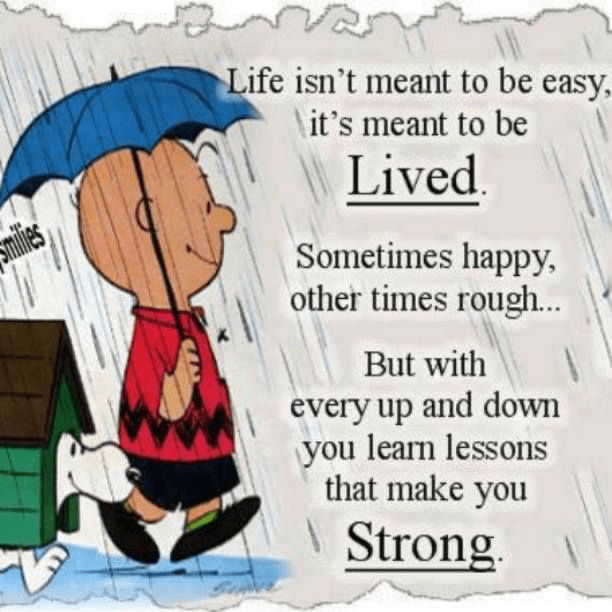
Charlie Brown often finds himself feeling sad or defeated, whether it’s from losing another baseball game, not being able to kick the football, or struggling with unrequited love. Despite his frequent bouts of melancholy, Charlie Brown never gives up. His resilience teaches us that it’s normal to have bad days and that perseverance is key to overcoming life’s challenges.

2. It’s Necessary to Express Your Emotions (Lucy)

Lucy Van Pelt is known for her bossy and outspoken nature. While she can be abrasive, she never hesitates to express her feelings, whether she’s angry, happy, or frustrated. Lucy’s forthrightness reminds us that bottling up emotions can be harmful. It’s important to communicate how we feel to those around us.

3. We Have to Find Joy in Simple Things (Snoopy)

Snoopy finds happiness in the simplest of pleasures, like sleeping on his doghouse roof, dancing, or pretending to be a World War I flying ace. Snoopy teaches us to find joy in everyday moments and to use our imagination to escape life’s stresses occasionally.

4. Seek Help When You Need It (Charlie Brown & Lucy’s Psychiatric Booth)

Charlie Brown often visits Lucy’s makeshift psychiatric booth for advice, despite her dubious credentials. While Lucy’s advice is often more comedic than therapeutic, the act of seeking help when needed is crucial. It emphasizes the importance of reaching out for support and talking about our problems.

5. Value Friendships (The Peanuts Gang)

The friendships within the Peanuts gang, despite their ups and downs, are central. The characters support each other through various trials, illustrating the importance of strong social connections. Healthy relationships can provide emotional support and contribute significantly to our mental well-being.

6. Embrace Your Individuality (Linus, Schroeder, and Others)

Each Peanuts character is unique, from Linus’s attachment to his security blanket to Schroeder’s passion for playing the piano. Embracing what makes us unique can foster self-acceptance and confidence. Celebrating our individual quirks can lead to a more fulfilling and authentic life.

7. Deal with Bullies Constructively (Charlie Brown)

Charlie Brown often faces teasing and bullying, particularly from Lucy. Despite this, he handles it with a positive attitude and resilience. His ability to maintain his integrity and kindness in the face of adversity teaches us to cope with difficult people in a healthy and constructive manner.

8. Stay Curious and Keep Learning (Linus)

Linus is constantly curious about the world, always asking questions and seeking knowledge, whether it’s about the Great Pumpkin or understanding complex philosophical ideas. Lifelong learning and curiosity keep our minds active and engaged, promoting mental agility and growth.

9. Don’t Let Setbacks Define You (Charlie Brown)

Despite his many failures, especially with the iconic football gag, Charlie Brown never lets setbacks define him. He continually tries again, embodying resilience. This teaches us that our failures do not define us; rather, it’s our ability to keep trying that shapes our character.

10. Promote Inclusivity and Understanding (Franklin)

Franklin, one of the first African-American characters in mainstream comics, represents the importance of inclusivity and understanding. His presence in the Peanuts gang highlights the value of diversity and the importance of creating spaces where everyone feels accepted and valued. Promoting inclusivity can lead to richer, more empathetic communities.

These simple, yet relevant lessons can help us think through some of the complexities of life with a little perspective and humor. It is important that in the fast-paced world we live in to remember that we can focus on what we need and choose ourselves in the difficult times. From embracing our unique qualities and seeking help when needed, to valuing friendships and promoting inclusivity, these lessons can help us navigate the complexities of mental health. By reflecting on the experiences of Charlie Brown, Lucy, Snoopy, Franklin, and the rest of the Peanuts gang, we can find guidance and inspiration for maintaining our own mental well-being.

Nurturing Mental Wellness: A Journey of Self-Discovery and Community for My People

In a world where the noise of everyday life can drown out our inner peace, prioritizing mental wellness becomes paramount. For Black individuals, navigating the complexities of society while maintaining mental health can be particularly challenging. The historical traumas, systemic injustices, and societal pressures often weigh heavily on our shoulders. However, amidst these challenges, there lies a path to finding peace, fostering mental wellness, and building a supportive community.

Acknowledge Your Struggles

Acknowledging our struggles is the first step towards healing. It’s okay not to be okay. In a society that often expects us to be strong and resilient at all times, it’s crucial to recognize and validate our emotions, whether it’s anger, sadness, or frustration. By allowing ourselves to feel and express our emotions, we begin to unravel the layers of internalized pain and trauma.

Embrace Self-Care Practices

Self-care isn’t selfish; it’s self-preservation. Taking time for ourselves, whether it’s through meditation, journaling, or engaging in activities that bring us joy, is essential for maintaining mental wellness. In a world that constantly demands our energy and attention, carving out moments of self-care becomes a radical act of self-love and resistance.

Seek Professional Support

Therapy is a powerful tool for healing. Breaking the stigma surrounding mental health within the Black community is crucial in creating space for healing and growth. Seeking therapy doesn’t mean we are weak; it means we are courageous enough to confront our struggles and work towards healing. Finding a culturally competent therapist who understands the nuances of our experiences can make a significant difference in our mental health journey.

Cultivate Community

Community is our greatest source of strength. Finding spaces where we feel seen, heard, and understood is essential for our mental well-being. Whether it’s through grassroots organizations, online support groups, or cultural gatherings, connecting with like-minded individuals who share similar experiences can provide a sense of belonging and validation.

Embrace Cultural Identity

Our cultural identity is a source of resilience and empowerment. Embracing our heritage, traditions, and ancestral wisdom can provide us with a sense of grounding and purpose. Celebrating our Blackness, reclaiming our narratives, and challenging stereotypes are revolutionary acts that affirm our worth and dignity.

Practice Mindfulness and Gratitude

Mindfulness allows us to cultivate inner peace amidst chaos. By staying present in the moment and practicing gratitude for the blessings in our lives, we shift our focus from what’s lacking to what’s abundant. Incorporating mindfulness practices such as deep breathing, yoga, or nature walks into our daily routines can help alleviate stress and anxiety.

Advocate for Systemic Change

Advocating for systemic change is essential for creating a more just and equitable society. Addressing the root causes of mental health disparities, dismantling systemic racism, and advocating for accessible and culturally competent mental health resources are critical steps towards collective healing.

As May is National Mental Health, let us remember that nurturing our mental wellness is an ongoing journey of self-discovery, healing, and resilience. By acknowledging our struggles, embracing self-care practices, seeking professional support, cultivating community, embracing our cultural identity, practicing mindfulness, and advocating for systemic change, we empower ourselves to reclaim our mental health and find peace amidst adversity. Remember, you are not alone, and your mental health matters.

Write the Vision

I was challenged recently by a dear sister/friend/colleague, the Rev. Cokeisha Bailey Robinson, to write a mission statement for my life. This challenge came after we had a wonderful dinner conversation about family, purpose, call, and work. I shared some of my personal stories surrounding my feelings of being in the right spot professionally and personally, the continued editing of my life and career, and my belief that God will have me where I need to be right when I need to be there.

Now I am a person that is continually looking at my life and evaluating if I am in the right spot at the right time. I am processing (at least weekly, lol) my station in life and looking at how I can be better, do more, and have a greater impact on my community, so this call to write a mission statement was intriguing. As I thought about it, I thought about my purpose and focus on my goals, and I pondered how the statement would help me on this road, not only professionally, but personally.

Ken Coleman wrote an article for Ramsey Solutions, and in it he said “a personal mission statement defines who you are as a person (or as a team member where you work) and identifies your purpose – whether that’s on the job or simply in life. It explains where you see yourself in the future, how you plan to pursue that purpose, and why it matters so much to you”. Habakkuk 2:2-3 says “Then the Lord answered me and said: Write the vision and make it plain on tablets, that he may run who reads it.  For the vision is yet for an appointed time; but at the end it will speak, and it will not lie. Though it tarries, wait for it; because it will surely come, it will not tarry.”

Writing my personal mission statement was a challenge, because I wanted it to really speak to who I am and how I move through this life. I recognize that who I am at this time is a different version of who I was years ago, and I wanted it to reflect who I am at this stage in my life. I reflected on it for a little while and then I sat down and got to work. My mission statement is as follows: “I will be a source of light and love in the lives of my family and my community. I will be authentic in every relationship I encounter. I will speak truth in love in my daily speech, and will be unapologetically me everyday! My goal is to reflect Christ daily, and to live in peace, intentionality and purpose!” ~ Dr. Denise Y. Lewis

This statement allowed me to think through who and what is important to me, how I present in this world, how I will remain true to who I am, and how peace, intentionally and purpose are essential for me. This means I will not engage with things and people who aren’t feeding my soul, and I will be mindful of what drives me on a daily basis. Conversely, this requires me to engage with people who can uplift me and hold me accountable for what I put into the world. Accountability partners are important for me and help me grow in so many ways.

Now, there are a few of reasons I am sharing all of this with you. The first is that now you are part of my accountability team. I have put my mission statement out there and if you don’t see me living into it, you are free to pull my coattails to let me know (although I’m pretty certain that won’t be the case). I also want you to find your own accountability team and share with them what your goals are and how they can support you on your journey. The second, is that I am part of an amazing group of women in the group started by Amber Mabry called Vision Defined Women. Amber challenged us for the month of August to identify three goals we wanted to work on this month. One of my goals was to reboot my blog by August 15th. Well, today is August 15th and here we are! I am grateful for group of women I shared that goal with, because I felt that I needed to make sure I accomplished it because I said it publicly. Finally, I want to challenge you to think about who you are and what you want in this life, and to write your own personal mission statement. It is not something that should be rushed, but done so thoughtfully and with prayer. Take the time to really think about how you identify in this world and what that looks like in your everyday life. Once you do that, sit down in a quiet space and write the vision!

In Honor of the Strong Woman!

As I reflect on this day, I am reminded that this is a day that we celebrate, yet mourn. Today my mother would be 75 years old, and I continue to honor her in all that I do. In my remembrance of her, I remember her strength and the strength of those that went before me.

I was raised by all women…strong, independent, self-determined women! I was given the tools to be that same type of woman, not having to depend on anyone to have what I need. I was given the messages (both directly and indirectly) that I could stand on my own, I could do whatever I put my mind to, and I was to keep pushing through when adversity struck. Now please understand, I don’t belittle any of these messages as they have helped me accomplish some major goals in my life. For example, after flunking out of college at 18 for not doing what I needed to do during my freshman year, I eventually went back to that same institution years later to obtain my Ph.D.  I have rebounded from failed relationships, I have overcome incredible adversity, I have raised my children to be strong and capable young men who are making a difference in this world, and I have done so with great pride and forte.

When problems occur for me personally or for those in my family, I am one who tries to make sure everyone is ok. I seek to find solutions for them to keep them from suffering hardships or problems, even when I am acutely aware that so many things are out of my control. Trying to maintain control of situations that are above me doesn’t hinder me, because the strong woman in me says to keep trying because there must be something that I can do. That superwoman mentality has proven problematic so many times in my life, but I readjust my cape and keep moving!

As a counselor, I often encounter women with this same strong mindset. Women who suffer from incredible anxiety and/or depression due to many of these issues. Women who take care of their immediate and extended families, women who experience employment problems, women who experience relationship problems, women who feel they must press forward, holding their head high and moving as if they can handle it all, and they appear to do it seamlessly. These women share how they have to stay up, stay strong, and take care of everything, even to the detriment of their own physical or mental health. When I ask them what they are doing to care for themselves, they often are at a loss because they don’t place themselves on the list of people to care for. I have realized through my work that I am she, she is me!

So often, women don’t operate in a way that allows them to be strong yet vulnerable at the same time. Vulnerability is a quality that we believe we can’t experience because it is portrayed as the opposite of strong. Vulnerability is not a weakness! I am here to tell you there is nothing wrong with being vulnerable and exposing your true self to those that love you and care for you. Allowing someone else to take care of you and being ok with that is important. In life, you must commit to taking care of each other and allowing your people to have a voice and be instrumental in the functioning of the family. When that doesn’t happen, the results can be detrimental.

My prayer for me and for each of you is that we allow ourselves to be strong yet vulnerable, that we give our all to our partners, and that we all are healed in a way that leads to positivity, joy and peace!

This blog was created as a nod to the legacy my mother left. In honor of my mother’s 75th birthday (and all the strong women who deposited into my life), today I launched my nonprofit organization, In Her Honor! In Her Honor seeks to be a change agent in the lives of young people to enable them to realize their potential and attain success by providing a caring and supportive environment and emphasizing the important elements of mentoring, education, athletics, and positive self-regard. Our primary goal is to make a significant difference in the lives of youth through effective and caring service.

This is a nod to the legacy of my mother. SEB Apparel (an apparel company created by my son last year), was created as a nod to the legacy my mother left. I am her legacy, my sister is her legacy, my children, nieces and grandchildren are her legacy. What will yours be?

Happy New Year 2022!

Welcome to Day 1 of the next chapter of your life. That always sounds so cliche’ and implies that you are to do something to actively change the trajectory of your life beginning today. The reason it sounds cliche’ is that it signifies that you haven’t been doing something to this point and that the change of calendar year will put you in a different place.

The truth of the matter is that so many people have been trying to do their very best with what they have, and the fact that you made it another day (not another year, because we have to take this life one day at a time) is something to celebrate. I want to take this time to send love and prayers to each of you for a year that exceeds all your expectations!

I also want to encourage you to trust yourself this year and do what brings you joy! Life is short and we spend so much time overthinking every aspect of it. I binge watched the final season of Insecure this week, and in an episode, the statement was made “what if there is no wrong answer?” when one of the characters was trying to make a decision for her life. I pose the same thought for you as you embark on a new year and are making decisions for yours. What if you chose what was right for you? What if you made choices that weren’t guided by anxiety and fear, but by hope and positivity? What if you appreciated your life for what it is? How would that change your outlook?

In 2022, I wish you peace, grace, good health, good decisions and love as you make the best of the life you have. Thank you for continuing on this journey with me…the best for all of us is yet to come!

It is good that I have been afflicted

It’s good to be back here! For those of you who follow me, you know I have not posted anything for several months, and to be honest, I could not find the words to write. As I shared in my first post, this blog was started in honor of my beautiful, courageous, amazing mother and grandmother. This space has been therapeutic for me and has enabled me to share from a variety of topics in an effort to help not only myself, but anyone who joins me on this journey. Since the inception of this blog, I have lost several other amazing, powerful, influential women in my life (most recently my beautiful friend and co-grandmother Diane Harris, who lost her courageous battle with breast cancer), and it has been difficult.

During the last few months, I have wrestled with grief, purpose, and legacy. We have reached the one year mark for the passing of my mother. I have taken the space to focus on my grief and have engaged in some much needed down time to get myself in a good space (not that I have arrived, but I’m a work in progress). I have thought about how we function in this current dumpster fire world we are living in, and have heard from so many people who are struggling with life in general. In my counseling sessions, I have shared space with people who are dealing with relationship issues, illnesses, trauma, and just a general struggle with day to day living. The themes are common and the struggle is real! I have talked to friends who are dealing with so much in life, and the ability to overcome these afflictions have been difficult. How do we find ways to be there for each other and continue to lift one another up?

In a recent conversation, I was speaking to someone who shared that everything they try to do in life has come with great struggle. They were sharing that they know people who everything happens very easily for, but that it was not their experience. I resonated with their plight, because I too have had success come with great struggle. I tread lightly when I say “everything happens very easily for”, because what we see on the outside is not always what it is. With that being said however, there are people that move through life with minimum difficulty. In my conversation with this person, I asked them “what can we learn from the struggle”?

Through struggle, we learn faith. Those of you who know the Bible, know the story of Job. Job had everything taken from him and was left with nothing but his faith in God. Even when his wife and friends told him he should give up, Job was steadfast in his faith and trust in God. I recognize when reading this story that this is not an easy place to be. Job lost his children and all of his possessions, yet he still held on to his faith. Job recognized that everything he had was due to God’s grace and that only what is gained through Christ will last.

Through struggle, we learn resilience. The ability to bounce back from negativity is a gift. To believe that we are going to make it, no matter what the circumstances look like is a blessing. Even when we don’t know how we are going to get through our current situation, the ability to look back and see how far we have come speaks to the resilience that rests within us. It helps us to stay in the fight even when we feel like we are losing. It helps us realize that we are stronger than we know, we are more resilient than we often believe.

Through struggle, we learn patience. Patience does not come easily for many. We live in a world where we want things quickly and freely. The faster we are able to have something, or do something, the happier we are. We want it and we want it now! Having to work and wait for something, no matter what it is, allows us to recognize the value of that thing and to treasure it and honor it for what it is.

Through struggle, we learn community. I have realized who my “people” are when I have gone through difficult times. I have learned who I can open up and share my true self with, and who is there because of what they think our relationship brings. I have said before that just because someone is on the same team as you, doesn’t mean they are rooting for you to win. I have found out who is rooting for me to win and celebrating with me, and who isn’t. That, in itself, is a major win!

Through struggle, we learn strength!

I titled this post “It is good that I have been afflicted” and I truly believe that! I am certainly not saying “good” as if there are things I wouldn’t gladly give back and not have to experience, such as loss, hurt, failed relationships, etc. However, through my afflictions I have gained more wisdom, power, strength and joy than I could have ever imagined. I have discovered who God is and who I am, and the power that is within me. I have realized my greatness in ways I would not have if every day had been smooth. I have learned lessons I would not have if I didn’t have challenges. I embrace the lessons of my past so my present and future can be brighter.

I asked a question earlier, and that was “how do we find ways to be there for each other and to lift each other up”? I believe that we do that by sharing our stories and authenticity with each other so in times of doubt, we can encourage others through our testimony. I believe we must take the time to help others when we can. Luvvie Ajayi Jones shared her very simple daily prayer, and that is to “let my helpers find me”. There are ways we can be helpers to others, and if we allow ourselves to be there for them, we may find an added blessing in the journey. I also believe we should show love, one to another, so that in difficult times, others know that they are not alone in the journey. Life can be hard, but we can get through it together!

Blessings and love!

A Celebration of Life

Unfortunately, I write this blog right after saying goodbye to my great-aunt Aleathea Germany. She is the one in the picture I posted in February, and at that time I shared that I was blessed that she was still here. She was 87 years old and was the one that looked out for us after my grandmother passed away. She told us often that she promised my grandmother that she would take care of my mother, my sister and myself, and that she did well! Since then, she has loved on my children and granddaughters as well!

As we were attending her Homegoing or Celebration of Life service, I was struck by a thought. We celebrate the life of our loved ones after they pass, but how often do we do it for those who are living? How much do we let our people know that we love them, we see them, and we honor them? We often get so bogged down by the minutia of life, that even with the best intentions, we struggle to find the time to be consistent, patient and kind.

At the beginning of 2021, I shared with my husband that each month I was going to do something for someone I loved. Now this did not have to only be a family member or close friend, but could include people I wanted to let know they are valued as part of my life. These gifts could include an inspirational book, a custom t-shirt, a gift card to a restaurant, a trinket, etc. I wanted to do this to let people know they are seen and loved. This was important to me because we survived a very difficult 2020, and isolation, stress and anxiety are real! As a counselor, I am acutely aware that “just because I carry a load well doesn’t mean it isn’t heavy”. We are all going through something, and the strongest of us need to have the space to say “I’m not okay, I feel ______”. To receive a token of love can be uplifting, and my hope is that they will know that I am here and I see them.

I also realize that in caring for others, and celebrating who they are, I often neglect to do the same for myself…as I am certain many of you do as well. In celebrating me, I must celebrate all of who I am. That can be difficult at times, because when I look at me, I often see the flaws, the shortcomings, the struggles…not the beauty, the strength, and resilience that is also a big part of who I am. I had to remind myself who I was and who I came from and that was uplifting for me. It made me realize that my greatness is non-negotiable, my power is real, my body is beautiful, and my accomplishments are a demonstration of my perseverance.

I came across this poem a few weeks ago and it speaks directly to what I am speaking of with regards to loving my whole self, flaws and all!

My mother-in-law, Barbara Lewis (who was an amazing, loving, beautiful woman in her own right), use to say all the time, “give people their flowers while they are alive”. That always resonated with me because it is so very important to do. Once people are gone, they can’t smell the flowers, hear the positive words, or know how valued they are.

Celebrate people while they are living, let them know you love them, and celebrate your life as well…they are worth it, you are worth it! And if no one has told you today…I love you and appreciate you for being here!

Rest well Aunt Dee…you are missed, you are loved!

Your Best is Enough!

As I write this blog, I am keenly aware that we are experiencing our one year anniversary of the global pandemic we know as COVID-19. It was one year ago that our world changed and we entered a shutdown of life as we knew it. We didn’t know much about this virus at that time, but what we thought we knew is that it wouldn’t last very long and that we would be back to our “normal” life in a few weeks…a month, tops!

Reflecting on the past year, I have seen so many people who have lost loved ones, who have struggled through their own illness or the illness of a family member, who have lost jobs, who have lost homes, and so much more. I see people who are doing their very best to make it using the tools they have and are pushing forward, creating a new “normal” for their lives. I see people doing their best to be strong!

In a recent Facebook post, I asked, “if you could describe this year in one word, what would it be”? My word was perspective, because during this pandemic my perspective changed about so many things. My perspective of what was a want vs. a need, my perspective that I was in control of so many areas of my life, my perspective of what and who was important, my perspective of what was actually giving me joy. The words that others contributed in response to that post included: adjustmental, endurance, perseverance, growth, resilience, humility, prayerful, focused, thankful, journey, faith, and difficult. As you think about this, what is your word, and how does it impact how you are moving forward in life?

Another thought for me that comes up is how so many of us have to continue to work, to push, to produce in the midst of being physically and emotionally exhausted. Across our country, people are being given the message that this is the time to make moves, to start businesses, to teach our children, to work from home etc., with no real days off. People are being held to the same pre-pandemic standards that they were one year ago. Mental exhaustion, depression, suicide, and drug & alcohol use have all risen, and we continue to receive the message that we must perform. Children who have not been in school for a year are forced to return to take a myriad of tests to measure their learning. Where do we find the space to say, “I’m not okay, I need _________”.

I saw the above quote in someone else’s post (I am not sure who the author is), but this spoke volumes when I read it. Our best is enough! That doesn’t mean our perfection is enough…it means our best. If the best you can do today is get up, get dressed, go to work, come home, clean the house, cook dinner, help your child(ren) with their schoolwork and spend quality time with your family, that is enough. If the best you can do today is get up, put on fresh pajamas, and breathe, that is enough (and some days that is exactly what I have done). No one can measure that for you.

As you move through the struggle of daily living, I encourage you to find your people…you know, the ones you can call when you need encouragement, the ones who have you and will lift you up when life gets hard. No one should have to be in this fight alone. We all need those people who can let us rest when we need to, but who also stand up with us, pushing or pulling as need be. We also need to recognize when it is time to get help and seek out a counselor if life is getting too hard. Going to counseling does not mean there is something wrong with you, it actually means you are strong enough to know you need to talk to someone. Seeking a counselor means you are aware that you need a little extra help and that you are strong enough to ask for it.

As we continue to maneuver our way through what we believe is the end of our COVID restrictions, how will you find a new “normal”. We will never go back to life as we knew it, and adjustments are necessary to press forward. Where will you make those adjustments? How will you define yourself? How will you ask for what you need? I want to encourage you to breathe, recognize your best is enough, and laugh, love and live each day to the best of your ability! You’ve got this!