
Joy as a Form of Resistance!

In a time where Black communities across America face a relentless stream of cultural, political, and emotional trauma—joy becomes more than a feeling. It becomes a radical act. The weight of racism, economic disparity, police violence, erasure, and political disregard bears down with unrelenting force. And yet, against this backdrop of injustice, Black joy rises. Not because the world has given us permission, but because we’ve chosen it as a form of resistance.

Joy Is Not a Distraction. It’s a Declaration.

In the realm of mental health, joy is often regarded as a byproduct of healing. But for Black Americans navigating a sociopolitical climate marked by racial injustice, cultural erasure, and historical trauma, joy is not just a feeling—it is an act of survival. It is, quite literally, resistance.

From a clinical perspective, persistent exposure to racialized trauma can lead to cumulative stress—often referred to as weathering—that takes a toll on both mental and physical health. The ongoing impact of police violence, health disparities, microaggressions, and systemic inequity has left many Black individuals in a chronic state of hypervigilance. For some, this manifests as anxiety, depression, racial battle fatigue, or even complex PTSD. Yet in the midst of all this, many in the Black community continue to create space for laughter, love, creativity, and celebration.

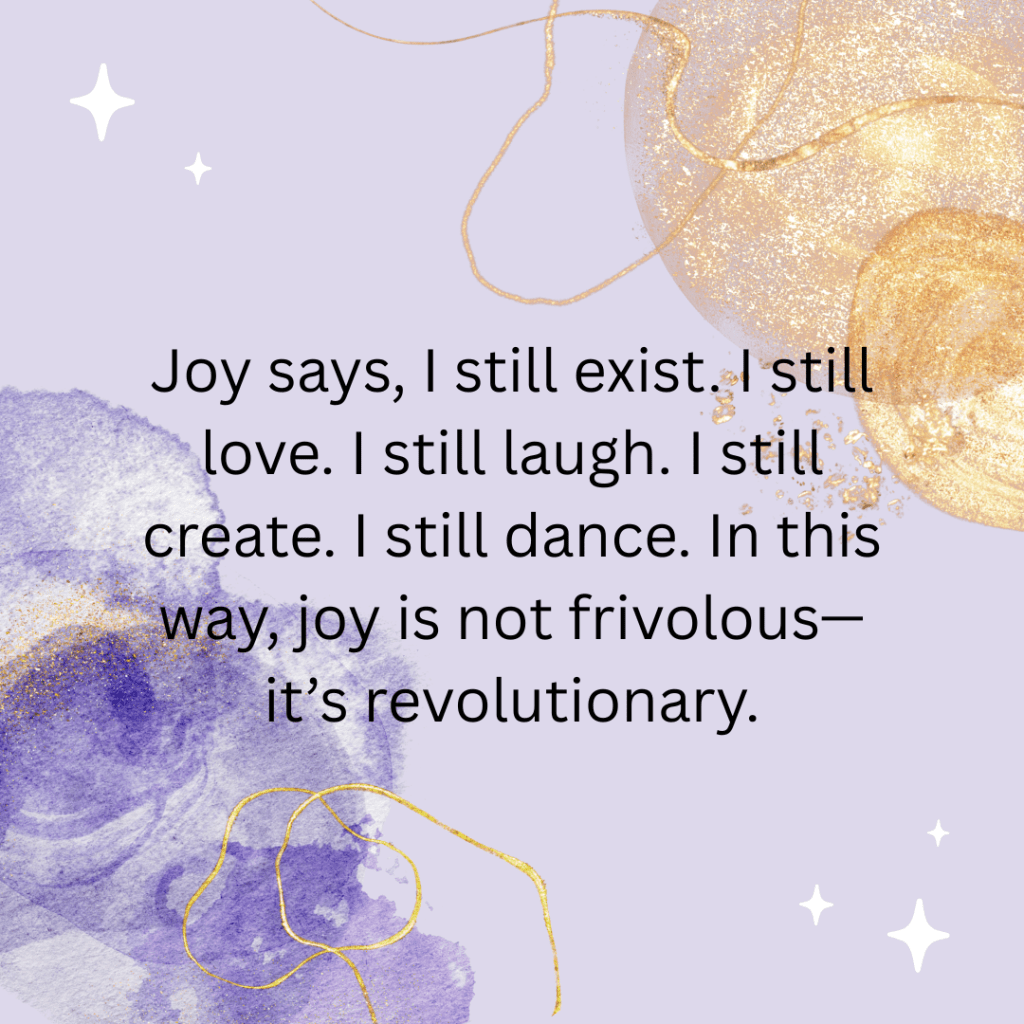
This is not a contradiction. It is a deeply therapeutic response.To be joyful in a world that has consistently tried to rob Black people of their humanity is defiant. Joy says, I still exist. I still love. I still laugh. I still create. I still dance. In this way, joy is not frivolous—it’s revolutionary. In every smile shared at the cookout, in every spontaneous moment of laughter between sisters, in every sideline cheer at youth games, or in every perfectly timed “Y’all alright?” text that turns into a healing phone call—Black joy holds space for healing, connection, and spiritual defiance.
What If You Just Had Fun?

That question—”What if you just had fun?”—might seem too light for times like these. But it’s not meant to suggest apathy. Rather, it’s an invitation to reclaim something sacred.

What if you gave yourself permission to feel free, even when the world tells you to stay on high alert?
What if you allowed your soul to breathe, to dance, to sing, to wear colors that make no sense but bring you joy?
What if you told the truth about your pain—and still chose laughter in the same breath?

In a culture that feeds off Black pain for entertainment, economics, and policy, Black joy breaks the cycle. It rewrites the narrative. It reminds us that our ancestors didn’t just survive—they celebrated, they created, they dreamed.

Choosing Joy Without Denying Reality

Let’s be clear: choosing joy does not mean ignoring grief, anger, or fear. Black people have long held the skill of “both/and”—we grieve and we grind, we rage and we rest, we cry and we cook. We understand that joy can live in the same room as pain.

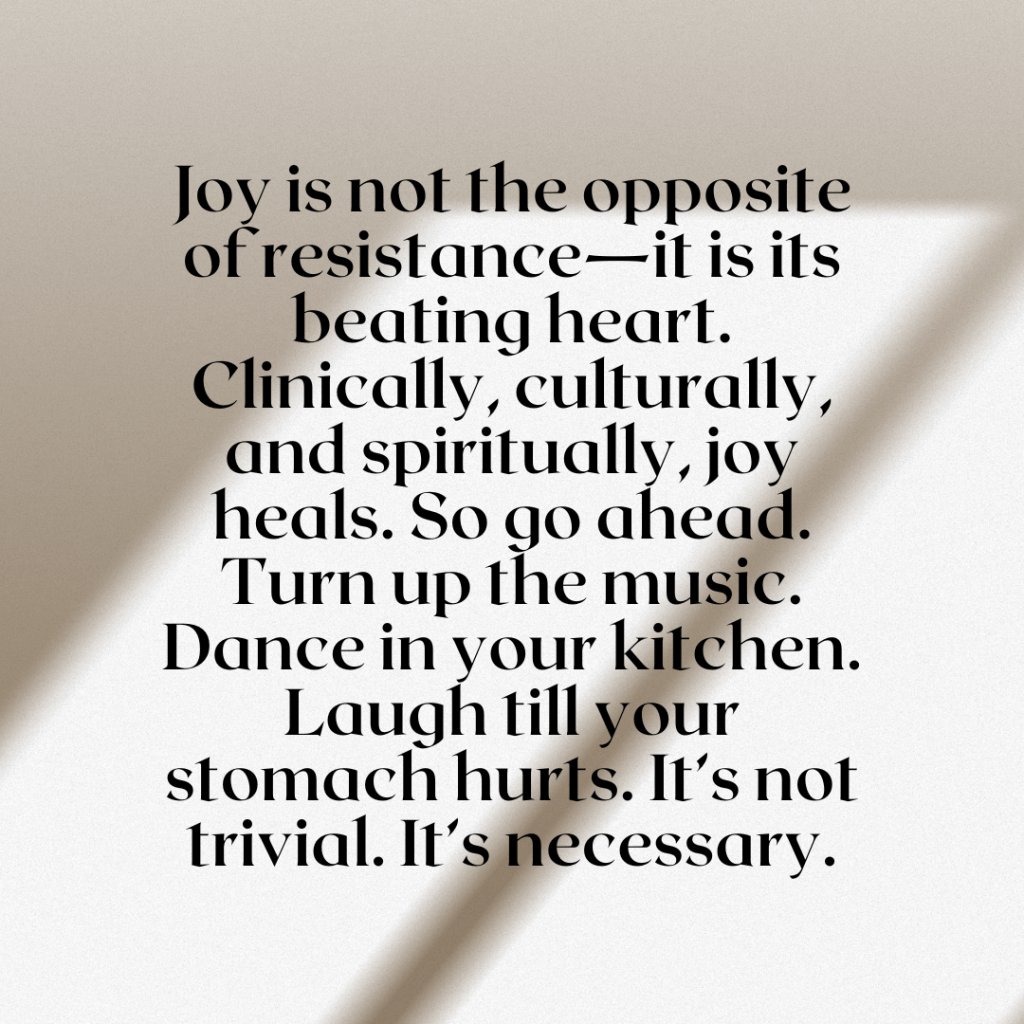
To rest, to dance, to play spades, to sing loudly off-key, to roller skate at sunset, to tell that same funny story one more time—is to declare, I will not be defined by trauma alone. That is not trivial. That is sacred.
A Call to Radical Joy

This is your reminder: Your joy is not an accessory to your activism. It is part of your liberation. Protect it. Practice it. Pass it on.

So yes, in this time of cultural reckoning and social fatigue, what if you just had fun? Not to run from what’s wrong, but to ground yourself in what’s still right. In who you still are. In what you still deserve.

Joy is resistance.
Joy is refuge.
Joy is your birthright.

And nobody—no system, no headline, no policymaker—can take it away.


The Importance of Connection

I recently had a conversation with someone and we spoke about the importance of friendships and connectiveness in a world that can sometimes feel isolating. That person and I were able to talk about who we have in our lives that speak to us in a variety of ways, and conversely, what it feels like when we don’t have those people who are present and who love on us. These friendships and relationships are places where we can be fully who we are, can be challenged and held accountable, and can be pushed to become better people.

We are living in a time that often moves at the speed of light, and we may find that connection can feel elusive. Yet, at the core of what it means to be human is our need to connect—emotionally, psychologically, socially, and culturally. For the Black community, the importance of connection carries both universal and culturally specific significance. It is intertwined with psychological well-being, resilience, and collective identity. Let’s explore the importance of connection through the lenses of psychology and Blackness, where individual and collective bonds are vital to navigating life’s complexities.

Connection and Psychology: A Core Human Need

Psychologically, connection is not just a “nice-to-have” but an essential need. Abraham Maslow’s Hierarchy of Needsplaces love and belonging just above the basic physiological and safety needs. This includes relationships with family, friends, and community, which serve as foundations for self-esteem and self-actualization.

Research shows that strong social connections lead to better mental health outcomes. Loneliness and social isolation have been linked to depression, anxiety, and even physical health problems like cardiovascular issues. On the other hand, meaningful relationships foster emotional regulation, stress relief, and psychological resilience. The act of sharing one’s experiences and emotions with others reduces the burdens we carry, fostering a sense of relief and hope.

For Black individuals, psychological connection goes beyond the individual. The connection to culture, history, and community often acts as a buffer against the harmful effects of racism, discrimination, and systemic oppression.

Blackness and the Cultural Importance of Connection

Within the Black community, connection is not just about personal relationships but also about the collective experience. From the rich traditions of oral storytelling to communal support systems, Black culture is steeped in practices that emphasize the importance of being linked to one another. This connection forms a crucial part of Black identity.

Historically, the Black community has faced overwhelming challenges—from slavery and segregation to ongoing racial disparities in health, wealth, and education. These struggles could have isolated individuals or fragmented communities. Yet, the opposite has often been true. Connection—to family, faith, and community—has been a lifeline.

The Role of Ubuntu: “I Am Because We Are”

A concept often associated with African culture is Ubuntu, which means “I am because we are.” This philosophy emphasizes that one’s humanity is intrinsically linked to the humanity of others. It’s a worldview where individuals find their sense of purpose and meaning in relation to their community. In a broader context, Ubuntu underscores the importance of interdependence, a concept mirrored in psychology’s understanding of attachment and relational theories.

Within the African-American experience, connection to ancestors, shared struggles, and communal triumphs have been central to survival and thriving. These bonds are not just emotional but cultural. Whether through church communities, activism, art, or music, there is a profound legacy of Black people connecting with one another to uplift, resist, and reclaim space.

Psychological Resilience Through Cultural Connection

For Black people, connection is not only important but vital for psychological resilience. Racial trauma—the emotional and psychological harm caused by racism—can deeply affect mental health. A strong connection to community and culture acts as a protective factor. Being part of a group with shared experiences fosters a sense of belonging and shared purpose, which can counteract the feelings of marginalization and isolation that often accompany racial discrimination.

Furthermore, the strength of intergenerational ties within Black families often becomes a source of wisdom, courage, and guidance. Elders pass down stories of resilience, faith, and survival, connecting past struggles to present and future hopes. This continuity of knowledge and support strengthens individuals and the collective body of Blackness.

Challenges to Connection: The Impact of Trauma

However, connection within the Black community is not without its challenges. Historical trauma—such as the transatlantic slave trade, Jim Crow laws, and ongoing systemic oppression—has sometimes disrupted Black families and communities. Post-Traumatic Slave Syndrome (PTSS) highlights how centuries of dehumanization have lingering effects, including disrupted family structures and strained relationships.

Psychologically, trauma can impact one’s ability to connect with others. Survivors of trauma often experience difficulty in trusting others, forming secure attachments, and developing healthy relationships. The Black community, bearing the weight of both individual and collective trauma, faces unique challenges in fostering connection while also possessing the profound resilience to rebuild those bonds.

Healing Through Reconnection

Despite the challenges posed by systemic oppression and historical trauma, reconnection has been a source of healing. Therapeutic practices such as family therapy, support groups, and community-based mental health programs offer pathways for Black individuals to reclaim and strengthen their connections. For instance, narrative therapy encourages individuals to reclaim their stories, which fosters a sense of agency and connection to their own experiences.

In spiritual and religious spaces, reconnection often occurs through rituals and collective worship, where the community gathers to affirm its shared values, history, and hope for the future. These spiritual practices often provide a balm for the wounds inflicted by a world that too often marginalizes and devalues Blackness.

Connection as a Lifeline

At its core, connection is a psychological lifeline and a cultural imperative. For Black individuals, it is through connection to self, others, community, and culture that strength and resilience emerge. Whether facing the daily microaggressions of modern life or the historical weight of systemic injustice, connection remains a vital element of healing and thriving.

In a world that sometimes tries to divide and isolate, the act of connecting—to people, stories, and traditions—is an act of resistance and empowerment. By nurturing these bonds, Black individuals and communities not only survive but thrive, building a legacy of hope, resilience, and collective strength.

Nurturing Mental Wellness: A Journey of Self-Discovery and Community for My People

In a world where the noise of everyday life can drown out our inner peace, prioritizing mental wellness becomes paramount. For Black individuals, navigating the complexities of society while maintaining mental health can be particularly challenging. The historical traumas, systemic injustices, and societal pressures often weigh heavily on our shoulders. However, amidst these challenges, there lies a path to finding peace, fostering mental wellness, and building a supportive community.

Acknowledge Your Struggles

Acknowledging our struggles is the first step towards healing. It’s okay not to be okay. In a society that often expects us to be strong and resilient at all times, it’s crucial to recognize and validate our emotions, whether it’s anger, sadness, or frustration. By allowing ourselves to feel and express our emotions, we begin to unravel the layers of internalized pain and trauma.

Embrace Self-Care Practices

Self-care isn’t selfish; it’s self-preservation. Taking time for ourselves, whether it’s through meditation, journaling, or engaging in activities that bring us joy, is essential for maintaining mental wellness. In a world that constantly demands our energy and attention, carving out moments of self-care becomes a radical act of self-love and resistance.

Seek Professional Support

Therapy is a powerful tool for healing. Breaking the stigma surrounding mental health within the Black community is crucial in creating space for healing and growth. Seeking therapy doesn’t mean we are weak; it means we are courageous enough to confront our struggles and work towards healing. Finding a culturally competent therapist who understands the nuances of our experiences can make a significant difference in our mental health journey.

Cultivate Community

Community is our greatest source of strength. Finding spaces where we feel seen, heard, and understood is essential for our mental well-being. Whether it’s through grassroots organizations, online support groups, or cultural gatherings, connecting with like-minded individuals who share similar experiences can provide a sense of belonging and validation.

Embrace Cultural Identity

Our cultural identity is a source of resilience and empowerment. Embracing our heritage, traditions, and ancestral wisdom can provide us with a sense of grounding and purpose. Celebrating our Blackness, reclaiming our narratives, and challenging stereotypes are revolutionary acts that affirm our worth and dignity.

Practice Mindfulness and Gratitude

Mindfulness allows us to cultivate inner peace amidst chaos. By staying present in the moment and practicing gratitude for the blessings in our lives, we shift our focus from what’s lacking to what’s abundant. Incorporating mindfulness practices such as deep breathing, yoga, or nature walks into our daily routines can help alleviate stress and anxiety.

Advocate for Systemic Change

Advocating for systemic change is essential for creating a more just and equitable society. Addressing the root causes of mental health disparities, dismantling systemic racism, and advocating for accessible and culturally competent mental health resources are critical steps towards collective healing.

As May is National Mental Health, let us remember that nurturing our mental wellness is an ongoing journey of self-discovery, healing, and resilience. By acknowledging our struggles, embracing self-care practices, seeking professional support, cultivating community, embracing our cultural identity, practicing mindfulness, and advocating for systemic change, we empower ourselves to reclaim our mental health and find peace amidst adversity. Remember, you are not alone, and your mental health matters.